


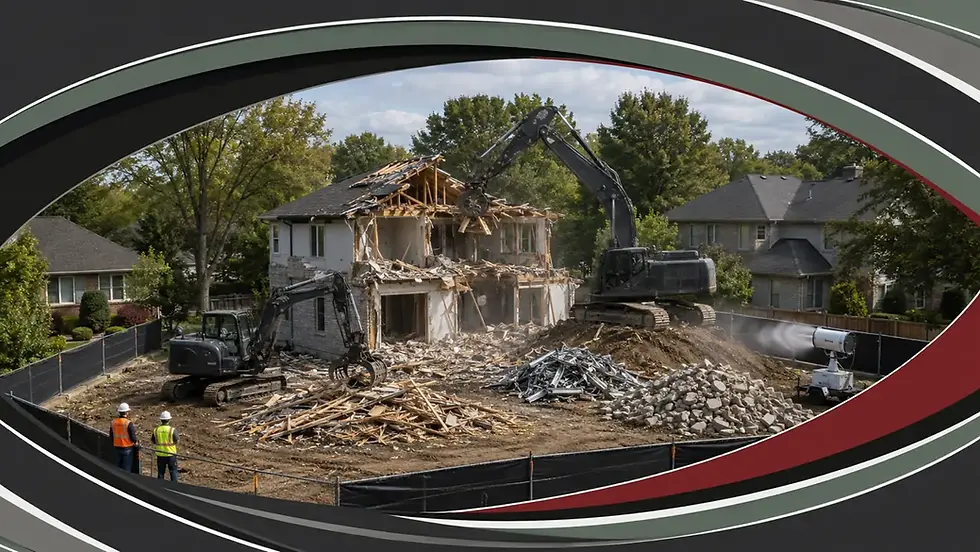


RESIDENTIAL DEMOLITION
PROFESSIONAL EXECUTION
READ OUR SERVICE FAQs


Residential Demolition in Ontario
Residential demolition is often the first physical stage of replacing an existing house with new construction.
Removing the old building is only part of that process. The demolition also needs to account for site access, debris handling, existing foundations, surrounding properties and the condition in which the site must be left for excavation and construction of the new home.
Master Siteworks provides residential demolition throughout Ontario for homeowners, builders and developers removing houses and other residential structures as part of redevelopment and new construction projects.
Our work can include complete house demolition, structural removal, applicable foundation removal, demolition debris handling and coordination with the excavation stages that follow. The exact scope depends on the building, property, project requirements and agreed demolition work.
For broader demolition capabilities, clients can review our Ontario building removal and demolition services.
Where demolition is being completed specifically to make way for a replacement residence, Master Siteworks can continue into earthwork for the proposed new home after the demolition stage is ready to transition.
The objective is not simply to make the old house disappear. It is to remove the existing structure in a controlled manner and leave the property positioned for what comes next.
Residential Demolition Services in Ontario


House Demolition for Replacement Home Construction
One of the most common reasons to demolish a house is to replace it with a completely new residence.
The existing home may no longer meet the owner's needs, or the property may be more valuable as a redevelopment site than with the existing building.
In these projects, demolition and new construction are closely connected. The proposed home may have a different footprint, a deeper basement, a larger garage or completely different structural elevations.
Master Siteworks approaches house demolition with the replacement project in mind.
Where included in our scope, removal of the existing structure can transition into excavation for the new building rather than treating demolition as an isolated operation with no consideration for the construction that follows.
Complete House Demolition
Complete house demolition involves removal of the residential structure rather than selective removal of one portion of the building. The work can include the primary house structure and other components included within the agreed scope.
Every property is different. A small detached residence can create a very different demolition operation from a large custom home with a full basement, attached garage and substantial concrete foundation.
Master Siteworks evaluates the building, available access and project requirements before determining the demolition approach. The objective is controlled removal of the structure while maintaining practical working conditions throughout the project.
Residential Demolition Contractor for New Construction
Choosing a residential demolition contractor for a redevelopment project involves more than finding someone capable of taking down the existing house. The contractor also needs to understand how demolition interacts with the property and subsequent construction.
Material needs to leave the site efficiently. Existing concrete may need to be addressed. Equipment needs suitable access. The finished demolition area should not create unnecessary obstacles for the excavation and foundation stages.
Master Siteworks provides demolition as part of a broader early-construction capability. That allows the project to move from removal toward new construction through related services rather than viewing the demolition site as the final product.
Residential Demolition Contractors and Project Scope
Homeowners searching for residential demolition contractors should compare more than a single demolition price. The scope being priced needs to be understood.
Questions can include whether the existing foundation is included, how demolition material will be handled, what portions of the property need to remain, and what condition the site is expected to reach when demolition is complete.
Master Siteworks defines our demolition work around the agreed project scope. A clear scope helps distinguish complete structural removal from work that may be handled separately by other contractors.
It also helps the project team understand when the property is ready to progress into subsequent construction.
House Demolition Contractor for Redevelopment Properties
Redevelopment properties can present conditions that do not exist on open construction sites. The house may sit close to neighbouring structures. Mature landscaping may surround the building. Access may be limited to a narrow driveway, and there may be little room to stage demolition material.
Master Siteworks plans residential demolition around the actual property. Equipment selection, material loading and truck movement need to correspond with the available space. The demolition method should reflect the building and surroundings rather than assuming every house can be removed using the same equipment configuration.
Home Demolition Before Building a New House
Demolition should support the new construction sequence. If the property is being redeveloped, the next major stage will often involve excavation for the proposed home.
That means the demolition operation should consider where equipment will need to work after the old structure has been removed. Master Siteworks can coordinate demolition with excavation for new structural foundations where both services are included.
This connection becomes particularly useful when the proposed building extends beyond the old footprint or requires excavation substantially different from the former house. The new building—not the demolished one—should determine the conditions ultimately established on the property.
Old House Demolition
Older houses can contain multiple generations of construction. Additions may have been built at different times. Foundation systems can vary between portions of the structure, and previous renovations may have altered the original building.
These conditions can become more apparent as demolition progresses. Master Siteworks evaluates the visible structure and responds to conditions encountered within our agreed scope.
Where specialized environmental, structural or other professional requirements arise, those matters should be addressed by the appropriate qualified parties. The age of a building alone does not determine the demolition method. The actual construction and site conditions do.
Demolishing Houses With Full Basements
A house with a full basement includes substantial below-grade construction in addition to the visible structure above. If the project scope includes removing the existing basement foundation, concrete walls and other structural components may need to be addressed after the upper building has been removed.
This stage is particularly relevant on replacement-home projects. The new residence may require a completely different basement configuration.
Master Siteworks can transition from old foundation removal into excavation for a new full basement where both services form part of the project. This allows below-grade removal and new excavation to be considered as connected stages.
Existing Foundation Removal
Not every residential demolition project ends when the above-grade structure has been removed. Existing foundation walls, footings, slabs or other concrete components can conflict with the proposed new building.
Where foundation removal forms part of the agreed demolition scope, Master Siteworks can remove applicable existing structural concrete to prepare for redevelopment. The exact requirements depend on the project.
Existing concrete should not automatically be assumed reusable for a completely different residence. The proposed structural design and direction from the appropriate project professionals determine what the new foundation requires.
Residential Demolition and Concrete Removal
Residential properties can contain more concrete than the main foundation alone. Garages, basement slabs, exterior pads and other concrete construction may be present around the house.
The demolition scope should identify which components are being removed and which are intended to remain. Master Siteworks coordinates concrete removal according to the agreed work.
Where old concrete conflicts with new excavation or construction, removing it during the demolition stage can provide a clearer transition into redevelopment. Unrelated concrete outside the agreed scope should not automatically be assumed part of a house-demolition project.
Residential Demolition Debris Removal
Demolition creates a substantial volume of material that needs to be managed throughout the project. Allowing debris to accumulate without a removal plan can restrict equipment movement and consume working space.
Master Siteworks coordinates demolition activity with material handling and removal according to the project scope. Tight residential properties can make this particularly important.
There may be limited room to separate demolition operations from loading areas, so material may need to leave progressively as the structure is removed. Efficient debris movement helps maintain a workable demolition site.
Sorting and Handling Demolition Material
A demolished house can contain many different construction materials. The appropriate handling method depends on the material, project requirements and applicable disposal or recycling arrangements.
Master Siteworks manages demolition material within our agreed scope and coordinates its movement away from the active work area.
Certain materials or conditions can require specialized handling outside ordinary demolition operations. Where such requirements apply, the appropriate qualified contractor or specialist should address them.
The goal is to keep the demolition operation organized without making unsupported assumptions about materials that have not been properly identified.
Residential Demolition on Tight Lots
Urban and established residential neighbourhoods can provide limited working space. Neighbouring houses may sit relatively close to the structure being removed. Fences, garages, trees and overhead infrastructure can further restrict equipment movement. Master Siteworks considers these conditions when planning the demolition operation.
Machine size is only one factor. The equipment needs sufficient room to work effectively, demolition material needs somewhere to go, and trucks need a practical loading arrangement. A controlled sequence becomes particularly important when the property does not provide large staging areas.
Residential Demolition Near Neighbouring Properties
Demolition work can occur near neighbouring homes, garages and other structures. The contractor needs to understand the available working area and maintain control over the demolition operation.
Master Siteworks approaches residential demolition according to the site conditions and agreed work limits. Where engineering, shoring, specialized protection or other professional requirements apply, those requirements remain with the appropriate qualified parties.
The presence of neighbouring construction can influence equipment selection and sequencing even when it does not prevent the demolition from proceeding.
Equipment Used for House Demolition
Residential demolition equipment should correspond with the building and property. Larger machinery can provide reach and production on suitable sites. More compact equipment may be useful for detailed work, restricted areas or material handling.
Master Siteworks selects equipment according to the project rather than assuming one machine is appropriate for every house. Equipment access needs to be considered before demolition begins.
The machine must reach the work area and have enough operating room to perform the demolition while material is progressively handled and removed.
Compact Equipment During Residential Demolition
Compact machinery can support demolition projects where detailed work or restricted access makes larger equipment impractical for a particular task. A mini excavator, skid steer or compact loader can be useful for suitable material handling, cleanup and earthwork operations.
Master Siteworks also provides operated compact excavation and loading equipment for projects where smaller machinery is appropriate. Compact equipment does not replace full-scale demolition machinery on every house. It provides another equipment option for the portions of a project where size and manoeuvrability matter.
Utility Coordination Before House Demolition
Existing homes are connected to infrastructure that needs to be considered as part of demolition readiness. Water, sewer, gas, electrical and communication services can affect the project.
The applicable disconnection, locating, approval and coordination requirements depend on the property and governing authorities or service providers. Master Siteworks performs our demolition scope based on the project information and confirmed conditions available to us.
Clients requiring help connecting project approvals with construction can review our permit and approval coordination service. Demolition should proceed from known project conditions rather than assumptions about existing services.
Residential Demolition Permits
House demolition can involve municipal permits, approvals and inspections depending on the property and jurisdiction. The applicable requirements should be determined before physical demolition begins.
Master Siteworks does not replace the municipal authority or regulated professionals responsible for approvals and design.
Our role is to perform the construction work within the approved and agreed scope. Planning permit requirements early helps prevent a demolition crew from being ready to mobilize before the project itself is ready to proceed.
Demolition and Hazardous Building Materials
Existing houses can contain materials that require assessment or specialized handling. The specific requirements depend on the building, materials present and applicable regulations.
Master Siteworks does not assume that every older house contains a particular hazardous material, nor do we represent ordinary demolition as a substitute for specialized assessment or abatement where those services are required.
Where the project identifies regulated or hazardous materials, the appropriate qualified parties should address them before or as required by the demolition process. Clear responsibility for these conditions should be established before demolition begins.
Residential Demolition and Site Preparation
After the primary structure has been removed, the property may still require work before new excavation begins. Construction access, staging areas, remaining material and other site conditions can influence readiness for the replacement project.
Master Siteworks provides property preparation for upcoming construction where the project requires a separate readiness stage. Demolition and site preparation have different purposes.
Demolition removes existing construction. Site preparation establishes workable conditions for what comes next. On some projects, those operations can occur as closely connected stages.
Residential Demolition and Excavation
Demolition and excavation naturally connect on replacement-home projects.
The demolition removes what already exists. Excavation then creates the below-grade space required for the proposed building.
Master Siteworks performs both services, allowing the transition to be coordinated where included in our scope. This is particularly valuable when old foundations need to be removed before the new building footprint can be established.
The excavation should ultimately correspond with the replacement residence rather than merely reproduce the area disturbed by demolition.
Transitioning From Demolition to Foundation Construction
Once demolition and new excavation are complete, permanent structural construction can begin. Concrete footings establish the base of the new foundation, followed by foundation walls or another specified structural system.
Master Siteworks can continue into new-home concrete foundation construction where those services are included. This creates a connected early-construction sequence:
existing house removal, new excavation, structural footings and foundation construction.
Reducing unnecessary handoffs between these stages can help maintain continuity in site knowledge and construction planning.
Residential Demolition Before ICF Construction
A replacement home can use a completely different foundation system from the structure being removed. Where the new residence has been designed with insulated concrete forms, demolition and excavation can transition into insulated concrete form foundation construction.
The old building does not determine the new structural system. Once conflicting construction has been removed and the new excavation established, the footing and ICF foundation can be constructed according to the applicable project information.
This is one example of why demolition should be planned around redevelopment rather than viewed only as destruction of the existing building.
House Demolition for Custom Home Projects
Custom-home redevelopment often begins with an existing house occupying a desirable property. The new residence can be substantially larger and more complex than the structure being removed. That makes coordination between demolition and new construction especially important.
Master Siteworks works with homeowners and custom builders on projects requiring the old residence to be removed before the new home can begin. The demolition operation can be planned with awareness of future excavation access, material movement and the proposed building footprint.
Residential Demolition for Builders
Builders need demolition completed in a condition that allows the redevelopment schedule to continue. If old foundations, debris or other conflicting construction remain within the proposed building area, excavation can be delayed. Master Siteworks works with builders requiring coordinated removal and early-stage sitework.
Where demolition forms part of recurring construction activity, our ongoing sitework relationships for builders can connect demolition with excavation and foundation services across multiple projects. The objective is to support the transition from an existing property into an active new-home construction site.
Residential Demolition for Developers
Residential developers can acquire properties containing existing houses that need to be removed before redevelopment. Several projects may also be moving through different construction stages at the same time.
Master Siteworks can support development teams requiring coordinated demolition, excavation and structural foundation work. Each property still needs to be evaluated individually.
Building size, site access, neighbouring conditions and the proposed redevelopment can differ substantially even when several projects belong to the same development program. Repeatable processes should improve coordination without assuming every demolition site is identical.
Planning Residential Demolition Before Equipment Arrives
Residential demolition should be planned before machinery mobilizes. The project team needs to understand the building being removed, applicable approvals, access, material handling, known services and what construction will follow.
Replacement-home projects can particularly benefit from reviewing demolition and excavation together. Clients can use our pre-construction demolition and sitework review to discuss practical sequencing related to Master Siteworks' construction scope.
The consultation does not replace architectural, engineering, environmental or other regulated professional services where those are required. It helps connect the available project information with the physical work ahead.
Demolition Access and Truck Movement
Demolition equipment needs to reach the structure, and trucks need to remove material from the property. These operations can compete for the same limited space. Master Siteworks considers equipment and truck movement as part of the demolition sequence.
On constrained residential sites, material may need to be loaded and removed progressively. On larger properties, more staging space may be available, but the eventual excavation and new construction routes should still be considered.
Maintaining workable access throughout demolition helps prevent the removal operation from obstructing itself.
What Happens After a House Is Demolished?
The answer depends on the purpose of the project. If the property is being redeveloped, demolition is usually followed by additional sitework rather than being the final construction stage.
Remaining structural components included in the scope may need to be removed. The site may require preparation, and excavation can then begin for the new residence. Master Siteworks' combined capabilities allow these stages to be coordinated where appropriate.
Once excavation is complete, footing and foundation construction can establish the permanent beginning of the replacement home. The demolition therefore becomes the first step in building something new.
Why Residential Demolition Planning Matters
Demolition can appear straightforward when viewed only from the perspective of removing a building. Redevelopment makes the operation more complicated.
The project needs to consider what must be removed, what needs to remain, how debris will leave, where equipment will operate and what condition the property needs to reach before new construction begins.
Master Siteworks approaches residential demolition around this broader construction sequence. The goal is controlled removal followed by a practical transition into the next stage of the project.
Residential Demolition Throughout Ontario
Master Siteworks provides residential demolition throughout Ontario for homeowners, builders and developers undertaking replacement-home and redevelopment projects. Every property creates different conditions.
Urban houses can have limited equipment access and neighbouring structures close to the work. Rural properties can provide more space but involve larger buildings and longer material-removal routes. Older homes can contain multiple generations of construction.
Custom-home redevelopment can require demolition to transition quickly into substantial new excavation. Master Siteworks adapts the demolition operation to the building, property and construction sequence rather than applying the same approach to every residence.
Frequently Asked Questions
Q: Does Master Siteworks demolish entire houses?
A: Yes. Master Siteworks provides complete residential building demolition for suitable projects within our agreed scope, including replacement-home and redevelopment work.
Q: Can you remove the old house foundation during demolition?
A: Yes, where existing foundation removal is included in the project scope. The requirements depend on the existing construction and what is needed for the proposed redevelopment.
Q: Can Master Siteworks excavate for the new home after demolition?
A: Yes. Where included in the project, Master Siteworks can transition from residential demolition into excavation for the replacement residence and subsequently into structural foundation construction.
Q: Do I need a permit to demolish a house in Ontario?
A: Demolition approval requirements depend on the municipality, property and project. The applicable requirements should be confirmed with the relevant authorities before demolition begins.
Q: Can Master Siteworks demolish a house on a tight residential lot?
A: Potentially, yes. Tight-access projects need to be evaluated based on the building, neighbouring conditions, equipment access, material handling and other site constraints.
Remove the Existing House With the New Project in Mind
Residential demolition is often the beginning of redevelopment rather than the end of an old building.
Master Siteworks provides residential demolition throughout Ontario for homeowners, builders and developers replacing existing houses with new construction.
By coordinating structural removal, applicable foundation removal, debris handling and the transition into excavation, we approach demolition around the property that needs to be built after the existing house is gone.